If you’ve ever looked into self storage, especially container storage, you might have come across the term ‘ISO container’. But what does that actually mean? And does it really matter when all you want is somewhere safe to store your stuff?
In short: Yes, it matters.
ISO containers aren’t just big metal boxes, they’re built to meet strict international standards (that’s what the ‘I’ and ‘S’ stand for) that ensure they’re strong, secure and suitable for global transport. These standards are exactly what make them perfect for self storage.
In this guide, we’ll break down what ISO freight containers are, why they exist and how they compare to other storage options — all in plain English.
What is an ISO Container?
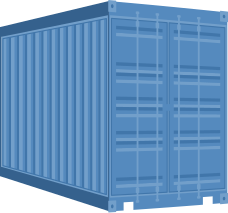
An ISO container is a shipping container that’s been built to meet standards set by the International Organization for Standardization, or ISO for short. These global standards make sure containers are safe, strong and consistent in their size, structure and durability, no matter where in the world they’re being used.
Originally designed for transporting goods across sea, rail and road, ISO containers are also widely used for self storage, and for good reason. Their standardised design means they’re:
- Built to withstand rough weather and rough handling
- Compatible with transport systems all over the world
- Easy to stack and move using cranes and forklifts
Even when used on land for storage, that same level of robustness makes a big difference. You’re getting a structure that’s designed to cross oceans and survive storms, so it’s more than up to the task of keeping people’s belongings safe and dry on even the rainiest of days.
ISO or IOS?
If you’re wondering why it’s called ISO and not IOS, the answer is surprisingly thoughtful. Because ‘International Organization for Standardization’ would have different acronyms in different languages (IOS in English, OIN in French), the founders chose a single short form — ISO. It’s derived from the Greek word isos, meaning equal.
In the organisation’s own words: “Whatever the country, whatever the language, we are always ISO.”
Understanding ISO Codes
Every ISO container has a unique identification code, sometimes called an ISO code or BIC code (short for Bureau International des Containers). These codes are used around the world to quickly identify a container’s size, type and key features — all in a standardised four-character format.
For example, a code like 22G1 tells you the container is 8ft 6in high, 20ft long and is a general-purpose dry container. This system helps ensure containers are handled correctly during shipping, stacking and storage — and it’s another reason why ISO standards make storage more consistent and reliable.
Why ISO Standards Matter for Storage
You might think international standards are only relevant when shipping goods across oceans, but they also play an important role in self storage. ISO containers are built to handle global transport, which means they’re secure, reliable and incredibly tough. And that’s exactly what you want when storing your belongings.
Here’s why those ISO standards make a difference:
- Strength & Durability: ISO containers are made from corten steel and designed to handle rough treatment, from being stacked high on cargo ships to surviving in harsh weather. That strength translates to long-lasting protection for anything you keep inside them.
- Weather Resistance: Part of the ISO criteria involves ensuring containers are windproof and watertight. That’s one of the key reasons ISO containers are a popular choice for storage in the UK, especially with our unpredictable weather.
- Security Features: Because they’re built to a global standard, ISO containers have consistent locking mechanisms, solid steel doors and a tamper-resistant design. It’s not just about keeping things dry — it’s about keeping them safe.
In short, ISO certification isn’t just a badge, it’s a sign you’re dealing with a container that’s been built to do what it says on the tin (or rather, the steel).
ISO Container Sizes & Dimensions
One of the biggest advantages of ISO containers is that their sizes are standardised. That means no matter where in the world they’re used, their dimensions remain consistent, making them easy to stack, transport and repurpose for storage.
At Pay Less For Storage, we offer 10ft and 20ft ISO-standard containers. Both are equally weatherproof, secure and surprisingly spacious — ideal for everything from a few boxes and bits of furniture to the contents of an entire flat or small house.
To give you an idea:
- Small: A 10ft unit is around 3 metres long, 2.4 metres wide and just under 2.6 metres tall. It’s great for smaller storage needs or as overflow space.
- Standard: A 20ft unit doubles that length to just over 6 metres, giving you plenty of space to work with if you’re storing larger items or moving home.
Not sure which one’s right for you? Try our interactive storage calculator — it’s a quick and easy way to estimate how much space you’ll need based on what you’re storing.
FAQs
What is the ISO container?
An ISO container is a shipping container built to meet international standards set by the International Organization for Standardization. These containers are designed for global transport, but their strength, security and weather resistance make them ideal for self storage. Standardised sizes ensure they’re easy to move, stack and use anywhere in the world.
What does ISO tank stand for?
An ISO tank is a type of container specifically designed for transporting liquids, gases and hazardous materials. It’s designed to meet specific standards set by the International Organization for Standardization, or ISO for short. Although they’re not used for self storage, ISO tanks are essential for safely moving liquids in bulk across long distances.
Why is it called an ISO container?
The name comes from the International Organization for Standardization, known by the short form “ISO”. The acronym stays the same across different languages and is inspired by the Greek word isos, meaning equal.
Are ISO containers waterproof?
Yes — ISO containers are built to be windproof and watertight as part of their certification. That means they keep out rain, wind and moisture, helping to protect whatever’s stored inside. It’s one of the key reasons they’re so popular for storage in the UK.

Matt Wallace
Matt is a Director of Pay Less for Storage. He blogs tips for storage customers and helps them navigate self storage.

Looking for
self storage?
Here are our self storage
locations across the UK